It’s frustrating that when I hear executives dismissing communication as just “soft skills.”
Soft? Really? Why don’t we examine the evidence?
👉🏽 David Grossman reported in “The Cost of Poor Communications” that a survey of 400 companies with 100,000 employees each cited an average loss per company of $62.4 million per year because of inadequate communication to and between employees.
👉🏽 Debra Hamilton asserted, in her article “Top Ten Email Blunders that Cost Companies Money,” that miscommunication cost even smaller companies of 100 employees an average of $420,000 per year.
👉🏽 SoftActivity found that ineffective company communication causes workplace anxiety for 80% of US employees.
👉🏽 According to research conducted by US firm Gartner, poor communication is responsible for 70% of corporate errors.
👉🏽 Apollo Technical references a survey indicating that 86% of employees and executives attribute workplace failures to poor communication and collaboration.
👉🏽 Pumble dot com discovered that teams who communicate effectively in the workplace may see as much as a 25% increase in their productivity.
That makes communication a bottom-line issue for businesses.
💯 In today’s fast-moving, often remote or hybrid work environments, communication is no longer just a “soft skill.” It’s a core business skill because the way we communicate at work affects productivity, culture, trust, and innovation.
That’s what got me thinking that there has to be a better way to communicate, especially at work, where relationships are ongoing, and the cost of poor communication is so high.
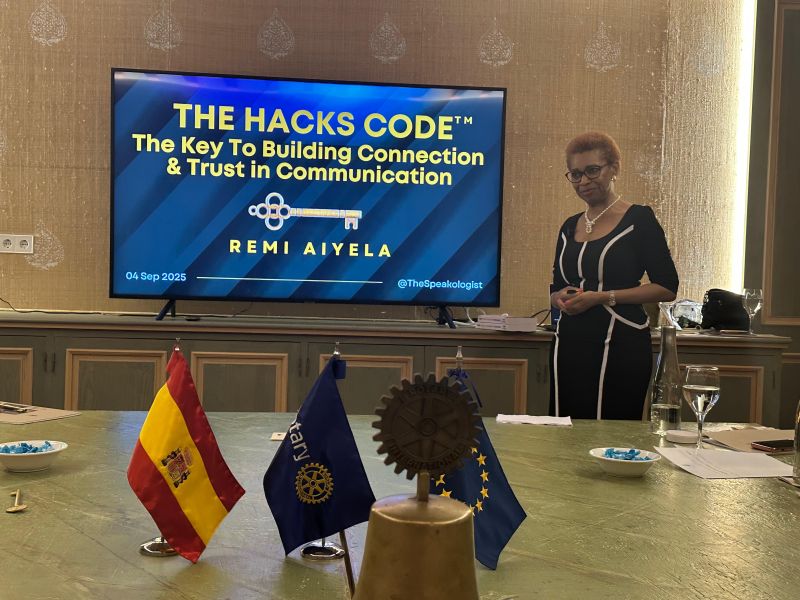
That’s why I created The HACKS Code.
This communication formula allows you to create connection, build trust and reshape relationships. One conversation at a time.
Is Communication Really a Soft Skill?